
PARIS, 2 November 2026 — European governments are encouraging residents to prepare emergency supplies that could sustain their households for at least 72 hours during a major crisis, as concerns grow over natural disasters, cyberattacks, infrastructure failures and international security threats.
For Kenyans living, studying and working in Europe, the recommendations raise an important question: what should diaspora families do to protect themselves and their loved ones if an emergency disrupts everyday life?
The advice is relevant to everyone living in the affected countries, including foreign residents.
The European Union’s 72-Hour Preparedness Strategy
On 26 March 2025, the European Commission unveiled its Preparedness Union Strategy, encouraging EU member states to strengthen their ability to respond to emergencies. It called for guidance enabling households to remain self-sufficient for at least 72 hours.
The strategy addresses extreme weather, flooding, pandemics, cyberattacks, disruptions to essential services and armed conflict. Its goal is to help people meet basic needs during the first days of an emergency.
Why Are European Countries Reminding Residents Now?
National advice differs. France promotes a 72-hour emergency kit; Sweden and Norway recommend around one week of supplies, while Germany provides guidance for longer disruptions, up to ten days.
In late October 2026, French authorities renewed public reminders. On 27 October, authorities in Normandy and Seine-Maritime encouraged residents to prepare essential supplies for three days.
These reminders coincide with international security tensions but do not establish that governments expect an imminent war.
What Should Kenyans Living in Europe Keep at Home?
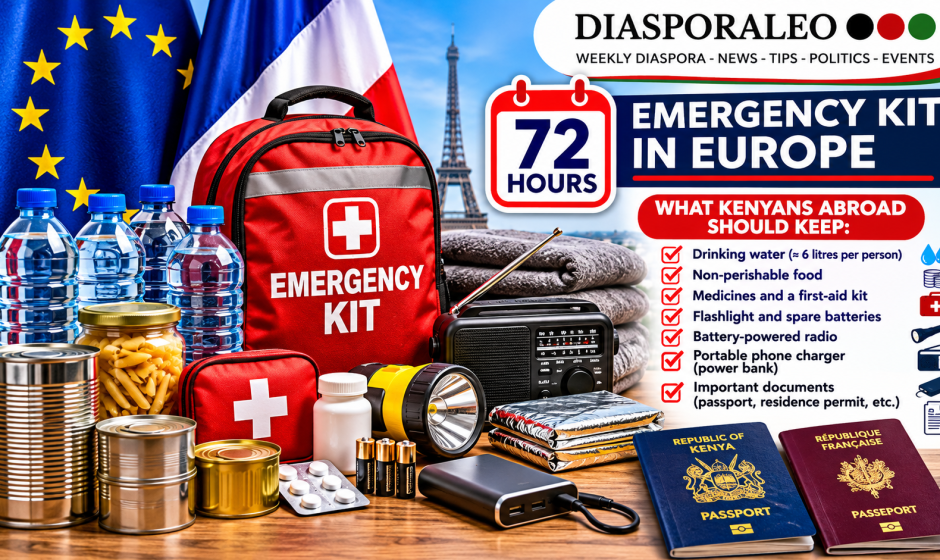
Follow the emergency guidance of your country of residence. A basic kit should include:
- Drinking water: approximately six litres per person for three days under French guidance.
- Food: non-perishable products that can be eaten without cooking.
- Medicines: essential prescriptions and first-aid supplies.
- Lighting: a flashlight and spare batteries.
- Communication: a battery-powered radio and a charged power bank.
- Warm clothing: blankets and appropriate seasonal clothing.
- Cash: some local currency if electronic payments fail.
- Documents: copies of identification, residence permits and medical information.
Adapt supplies for children, older relatives, pets and anyone with specific medical needs. Check the kit periodically.
Kenyan Passports, Residence Permits and Other Documents
Kenyans abroad should keep accessible copies of Kenyan passports, residence permits, applicable visas, health-insurance documents and other important records. Students may add university registration documents; workers may retain employment and insurance details.
Secure digital backups can help, but residents should also have copies accessible without an internet connection. Protect originals against water damage.
Staying in Contact With Family in Kenya
Power cuts and network failures may interrupt communication. Agree on a trusted emergency contact, keep key phone numbers on paper and discuss alternative communication plans with relatives in Kenya.
A temporary loss of contact does not necessarily mean someone is in danger. During serious emergencies, seek assistance from local authorities and consular guidance from the nearest Kenyan embassy or consulate where appropriate.
What About Kenyan Students and Newly Arrived Residents?
Learn how your host country issues public alerts, and familiarise yourself with accommodation evacuation procedures. Across the European Union, 112 is the common emergency number.
Check official local notices rather than relying only on WhatsApp messages or social media posts.
Is Europe Preparing for War?
Russia’s continuing war against Ukraine and tensions involving Iran, Israel and the United States have heightened international uncertainty. The European Commission’s strategy includes geopolitical threats and armed conflict among the risks to consider.
Nevertheless, there is no confirmed evidence that recent emergency-kit reminders were issued because governments expect an immediate military attack. The same supplies can help during floods, storms, wildfires, cyberattacks and power outages.
The Role of Kenyan Embassies and Diaspora Associations
Embassies and diaspora associations can help share accurate information, encourage emergency-contact planning and support vulnerable community members. During an active emergency, follow instructions from local emergency authorities first, and verify announcements through official channels.
Conclusion: Preparedness, Not Panic
Europe’s renewed emphasis on preparedness comes amid international uncertainty, but the reminders should not be mistaken for an announcement of imminent war.
For Kenyans living across Europe, the practical message is to keep supplies ready, protect important documents, maintain family contacts and understand local emergency procedures.
Being prepared does not mean that war is coming. It means helping Kenyan families abroad face unexpected emergencies wherever they live.